Hi, I’m Vivian! Welcome to my little corner of the internet :))

I’m currently a student at Rice University, but I’m also a lifelong performer, amateur documentarian, public health advocate, and unapologetic soccer enthusiast. I grew up in Suzhou, where I spent hours filming the streets and markets I loved. Along the way, I trained in Sichuan Opera face-changing, a traditional Chinese art form that taught me discipline, transformation, and the power of storytelling.

Years later, a late scoliosis diagnosis, and the surgery that followed, changed the direction of my work. What began as back pain turned into research, school screenings, health campaigns, and a commitment to making sure fewer students fall through the cracks the way I once did.

Outside of that, you’ll probably find me on a soccer field, behind a camera, experimenting with immersive VR spaces, or documenting the small details of everyday life.

This site is a collection of the research, projects, performances, and questions that continue to shape who I am.

I’m glad you’re here :p

Home Innovative Scoliosis
Screening Model
Research Metaverse-Meditation
Video
Rice Wellness Projects Bianlian (Change of Faces) All Gender Soccer Match Video Production Life at Rice
Combination of Medicine and Education China Thinks Big International Conference at Harvard Home-school Guidance on Adolescent Spinal Health Scoliosis Tracking App
This book introduces the fundamentals of adolescent scoliosis, including how to recognize early signs, which daily habits may compromise spinal health, and what preventive and treatment options are available. Through clear guidance for both families and schools, the book aims to raise public awareness of adolescent scoliosis and promote early detection and timely intervention, ultimately reducing its long-term impact on young people's health. Link to e-book
Lab Experiences Guided & Independent Research

King Lab

The King Lab at Rice University, led by Professor Michael King, focuses on bioengineering approaches to cancer and immune cell research, investigating how cells such as macrophages interact with tumors and the circulatory system to inform next-generation therapeutic strategies. As an undergraduate research assistant, I work with Ph.D. researcher Natalie on a macrophage-centered project, contributing to experimental design, data collection, and analysis within the lab’s translational biomedical research framework.

Luan Lab

The Luan Lab focuses on developing multimodal, bi-directional neural interfaces that integrate large-scale neural recording, high-resolution optical imaging, and precise neuromodulation to better understand neural circuitry and advance next-generation neuroprosthetic technologies for neurological disorder treatment. Within this project, I work as an undergraduate research assistant alongside Ph.D. student Albert Li on neural interface experiments involving data acquisition, signal processing, and interface optimization.

SSSIP
Stanford Summer Science Internship Program

The Stanford Summer Science Internship Program focuses on investigating the molecular mechanisms underlying neurodegenerative diseases, particularly Alzheimer’s and Parkinson’s disease. Within this program, I conducted research on how tau protein mutations disrupt microtubule stability, impair cellular structure and mitosis, and contribute to neurodegeneration. I performed fluorescence imaging and Keyence-based quantitative analysis. I also designed DNA primers via PCR and led electrophoresis verification of wild-type and mutant plasmids to ensure accurate cloning. Through SSSIP, I gained hands-on experience in research while contributing to developing more effective treatments for neurodegenerative disorders.

Shanghai Institute of Materia Medica, Chinese Academy of Sciences (SIMM)

As a high school research assistant at SIMM, I assisted with developing and validating near-infrared (NIR-II) fluorescent probes to evaluate the protective effects of flavonoid compounds against cisplatin-induced acute kidney and liver injury. We synthesized and characterized squaraine-based probes, identifying SQ-686-CD as the most effective for dual-organ imaging in AKI/ALI mouse models. Using this imaging platform, we assessed the dose-dependent therapeutic effects of apigenin by integrating in vivo fluorescence imaging with biochemical markers and histological analysis. The results demonstrated that high-dose apigenin significantly mitigated renal and hepatic toxicity.

  • Auditing AI: Evaluating Its Performance in Detecting Health Misinformation and Bias Link to the paper
    Artificial Intelligence (AI) and Machine Learning (ML) have emerged as vital tools in healthcare. Their instant availability, conversational usability, and broad domain coverage help reduce barriers to access while improving health literacy. However, their implementation faces hurdles, including concerns about transparency, ethics, fairness, algorithmic biases, and privacy (Kissinger, 2021). Whereas the developers talk about ideals, their publicity tends to feature possible advantages and mute risks. Because of these tensions, AI audits are of great significance, ensuring that medical information is accurate, fair, and trustworthy (Hameed, T., 2025). In this paper, two AI large language models (ChatGPT and Google Gemini) alongside two traditional search engines (Google and Bing) are audited to evaluate how each platform presents health information, with particular attention to misinformation and bias. I conducted 2 prompts to judge whether OpenAI produces unverified claims or hallucinated citations, and whether it can provide fair and representative answers for diverse populations, such as people with deeper skin pigmentation. This audit seeks to assess the reliability, safety, and equity of OpenAI in delivering health information.
  • Enhancing Vibration Signal Measurement Accuracy in Machine Tool Bearings Using Multi-Sensor Data Fusion Techniques
    Link to the paper
    This research project began in the summer following the completion of my AP Seminar course, prior to the formal start of AP Research. Motivated by my initial interest in engineering and embedded systems, I started exploring the accuracy limitations of single-sensor vibration monitoring in complex machine environments.
  • Fusion of EEG and EMG Signals for Home Automation Based on Convolutional Neural Networks with Portable devices
    Link to the paper
    Society's advancement is marked by improved quality of life, but challenges faced by individuals with limited mobility due to injuries cannot be overlooked. These challenges, coupled with potential safety risks like unattended gas stoves leading to fires, highlight the need for solutions. To address this, this paper proposed an innovative smart home system for controlling LED light by detecting specific real-time EEG and EMG signals from portable devices. The system uses Bluetooth to transfer the real-time signals of EEG attention and EMG gestures and a convolutional neural network for binary classifications. Through analyzing real-time EEG attention and EMG gestures, our approach enables seamless control of smart devices. By merging technology with EEG and EMG analysis, our project empowers limited mobility individuals for an enhanced quality of life.
  • The Innovation of Integration of Medicine and Education Model and Mobile Phone Intelligent System to Improve the Efficiency of Adolescent Scoliosis Screening Process and Prevention Link to poster
    The number of middle and elementary school students diagnosed with scoliosis, a spinal disease, has exceeded 5 million in Chian and has been increasing at a rate of 300,000 per year. What's more, scoliosis usually worsens the most rapidly during teenagers' peak growth period, aggravating their conditions. Therefore, it is critically important for the early screening and treatment of scoliosis. However, due to the size of the medical force, screening on a large scale proves to be a challenging task. This CTB group initiated the country's first innovative model, "Integration of Medicine and Education", to approach scoliosis screening: medical personnel first train school PE teachers the skills to conduct scoliosis screening and take assessments; PE teachers then accomplish screening. This methodology could effectively improve the efficientcy and scale of screening. This group has adopted this screening methodology on a total of 12,803 students and analyzed the collected data to verify its effectiveness. In addition, this group proposed and built a mobile phone-based intelligent scoliosis screening applet (mini-program) with the support of a technical team. This phone program has completed 200 screening cases, and the analyzed data proved its extremely high accuracy, which improved the efficientcy of scoliosis screening on a large scale.
  • Green Preparation of Silver nanoparticles and Its Impacts on Suzhou lotic Ecosystem Link to the presentation
    Why silver nanoparticles? Why lotic ecosystems?
    During the epidemic, the demand for sanitizer increased a lot, nano silver particles were widely used.
    Silver nanoparticles are widely used in the aquaculture industry, especially in the shrimp farming
    There are few relevant studies, and the conclusions of existing studies are often conflicting
Scoliosis Awareness & Screening Corner HPV Awareness Campaign
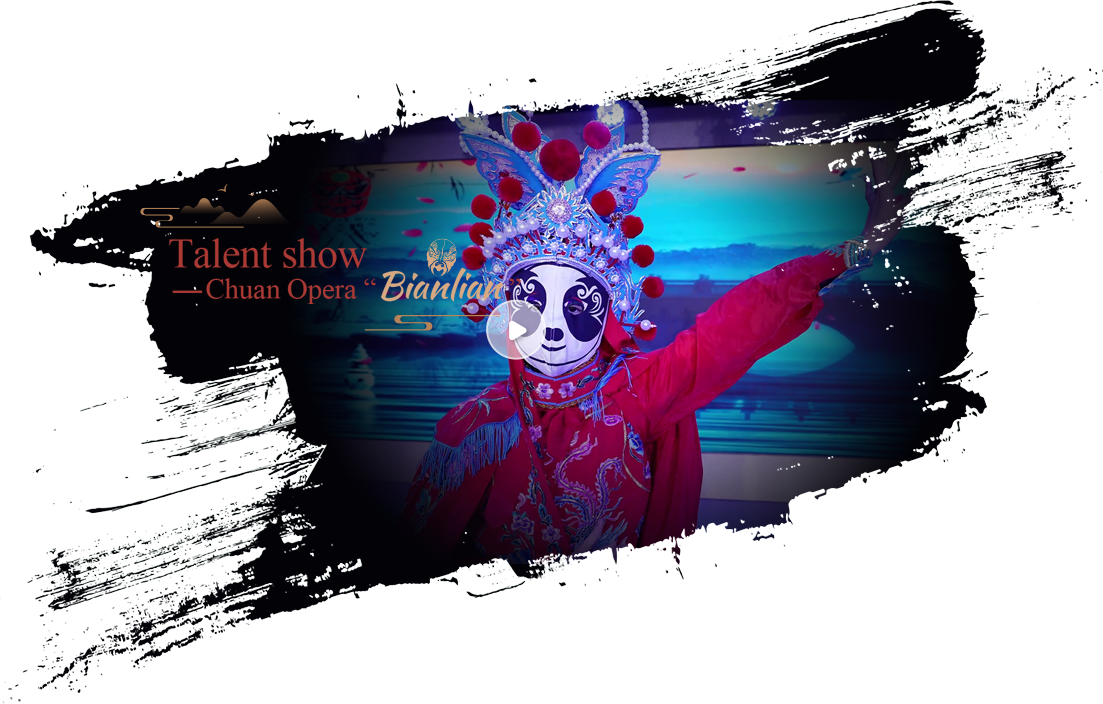
Photo of our team performing at the Opening Ceremony of the 2023 Chengdu Universiade before an audience of over 50,000, as featured by Chengdu Shangbao Bright News Channel (CDSBNC).
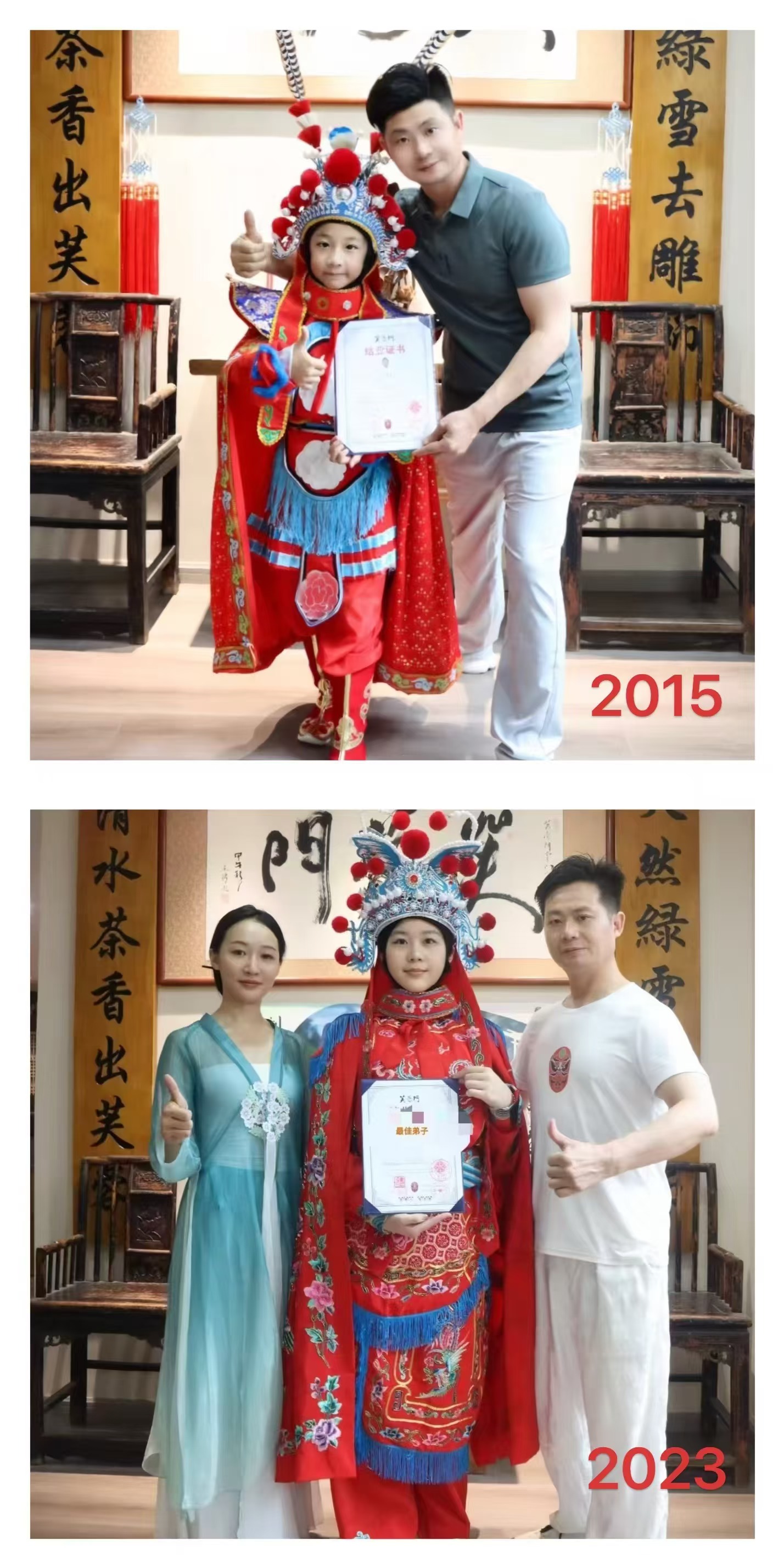
I began training in Bianlian (Change of Faces) as a child and became the youngest and the first female apprentice of the Furong Sect under the guidance of my master. This photo captures a full-circle moment: growing from a young apprentice into a performer who now helps preserve and share this centuries-old art.
In this documentary film, I recorded the entire process of me recovering from scoliosis surgery and inventing, advocating, and implementing an innovative scoliosis measuring model into a documentary film. I hope this movie could help more teenagers prevent further harm from scoliosis and make impacts on bigger communities.
These are designed to be 360° VR videos, allowing meditators to look around freely in every direction as if they were truly inside the scene. For the full immersive experience, we recommend watching with a VR headset. If without VR headset, meditators can still watch on their phones to explore the cave, and let the meditation guide them to the right pace.

During my time at Stanford summer research, every icebreaker session would inevitably lead to someone asking me where I’m from.

For so many times, I wanted to tell everyone the name of my hometown, but I knew that geographical explanations would be difficult for those unfamiliar with the region. So each time, I would simply say, “I’m from near Shanghai.”

But my hometown is so much more than just “near Shanghai”. It is the home to one of the most exceptional examples of classical gardens in East Asian culture, dating back to 514 BCE, and recognized as a UNESCO World Heritage Site. We have temples that poets have celebrated for centuries, as well as top-notch modern skyscrapers. Last but not least, some of the finest traditional pastries.

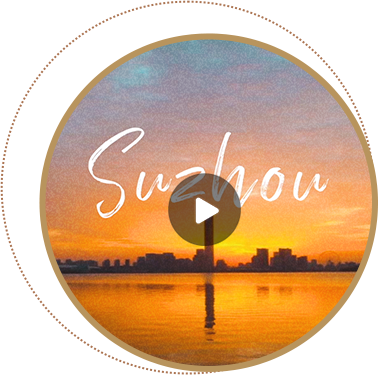
So I took the time, as an amateur photographer, to document my hometown and create this video. Now, whenever someone asks me where I’m from, I would show them this video and answer with confidence:

I am from Suzhou.

Load More ...